
If your day feels packed from morning to night, the idea of carving out a full hour for the gym (not to mention the drive to and from) can feel unrealistic. That’s where “snack-sized workouts” come in. These short bursts of intentional movement can be spread throughout your day while delivering real benefits.
Instead of waiting for the perfect window to work out (and feeling like a failure when you don’t get one in), these mini sessions make it easier to stay consistent, keep your energy up, and support your metabolism – even on your busiest days.
What Are Snack-Sized Workouts?
Snack-sized workouts are brief, high-intensity bouts of exercise, typically lasting anywhere from 2 to 10 minutes. Think of them as “movement breaks” with purpose.
These can include:
- Bodyweight circuits (squats, push-ups, lunges)
- Quick cardio bursts (jump rope, stair sprints)
- Mobility and core exercises
The goal isn’t to replace longer workouts entirely but to supplement your day with movement that adds up over time.
Why Short Workouts Still Work
It’s easy to assume that shorter workouts don’t “count,” but research says otherwise.
A 2019 study published in the Journal of Physiology found that breaking exercise into short, intense intervals throughout the day improved cardiovascular fitness similarly to longer, continuous workouts.
Another 2021 study in Medicine & Science in Sports & Exercise showed that brief activity “snacks” (as little as 1–2 minutes) performed multiple times daily improved blood sugar control and metabolic health.
In other words, consistency and intensity matter more than duration.
The Metabolism Boost Effect
Quick stints of high-intensity movement can temporarily increase your metabolic rate – a concept often referred to as excess post-exercise oxygen consumption (EPOC).
This means your body continues to burn calories even after you’ve finished moving.
A 2020 review in Sports Medicine found that high-intensity intervals, even when brief, can increase calorie burn post-exercise compared to steady-state activity.
While each session may be short, stacking multiple sessions throughout the day can create a meaningful impact.
Energy, Focus and Daily Performance
Snack-sized workouts aren’t just about boosting metabolism and burning calories. They’re also a powerful tool for staying sharp and energized.
A 2018 study in the British Journal of Sports Medicine found that breaking up long periods of sitting with short activity breaks improved cognitive function, mood and energy levels.
If you’ve ever hit that mid-afternoon slump, a 5-minute movement break may do more for your focus than another cup of coffee.
How to Build Snack-Sized Workouts Into Your Day
The key is to keep things simple and repeatable. You don’t need equipment, a gym or a perfect schedule.
Here’s how to make it work:
1. Anchor Movement to Existing Habits
Pair short workouts with things you already do:
- 5 minutes of squats and push-ups after brushing your teeth
- A quick stair circuit before lunch
- A core session while dinner is cooking
2. Keep It Short and Focused
Pick 3–4 movements and cycle through them:
- 30 seconds of work, 15 seconds of rest
- Repeat for 5–8 minutes
Example:
- Jump squats
- Push-ups
- Mountain climbers
- Plank hold
3. Aim for Intensity, Not Exhaustion
You should feel challenged, but not wiped out. The goal is to boost your system, not derail your day.
4. Stack Your Sessions
Two to four short sessions throughout the day can add up to 15–30 minutes of total movement – without ever blocking off a full workout window.
Who Benefits Most From This Approach?
Snack-sized workouts are especially helpful for:
- Busy professionals who struggle to find long workout windows
- Beginners easing into a routine
- Anyone trying to increase daily movement without overhauling their schedule
- People who sit for long periods and need frequent movement breaks
They’re also a great way to stay consistent during travel, hectic seasons or when motivation is low.
Simple Sample Day
Here’s what this could look like in real life – no planning required:

Morning: 5-minute bodyweight circuit
Set a timer for 5 minutes and rotate through:
Set a timer for 5 minutes and rotate through:
- 10 squats
- 8–10 push-ups (modify on knees if needed)
- 10 alternating lunges
-
20 jumping jacks
Repeat continuously until time is up.
Midday: 3-minute movement burst
- Walk briskly or climb stairs for 30 seconds
- Slow down for 30 seconds
- Repeat 3 times.
Afternoon: 5-minute desk workout
Cycle through:
Cycle through:
- 10 chair dips
- 8–10 one-legged squats (each leg, use desk or chair for balance)
- 12 standing desk push-ups (hands on desk edge)
- 15 seated knee raises (core focus)
- Repeat continuously for 5 minutes.
Evening: 5-minute core + mobility reset
Move through:
Move through:
- 20-second plank
- 10 bird dogs (each side)
- 10 dead bugs (each side)
- 20-second child’s pose stretch
- Repeat for 5 minutes.
Total: ~18 minutes of movement, spread across the day. No guesswork, no gym required.
Do You Still Need Longer Workouts?
Short answer: It depends on your goals. Snack-sized workouts can support:
- General fitness
- Energy and mental clarity
- Metabolic health
- Weight management
However, if your goals include building significant muscle or training for performance, longer, structured workouts still play an important role.
Think of snack-sized workouts as a tool during intense, busy seasons when getting to the gym is harder than usual – not a replacement.
Final Thoughts
Fitness doesn’t have to be all-or-nothing. Short, intentional bursts of movement can help you stay consistent, improve energy and support your overall health – without rearranging your entire day.
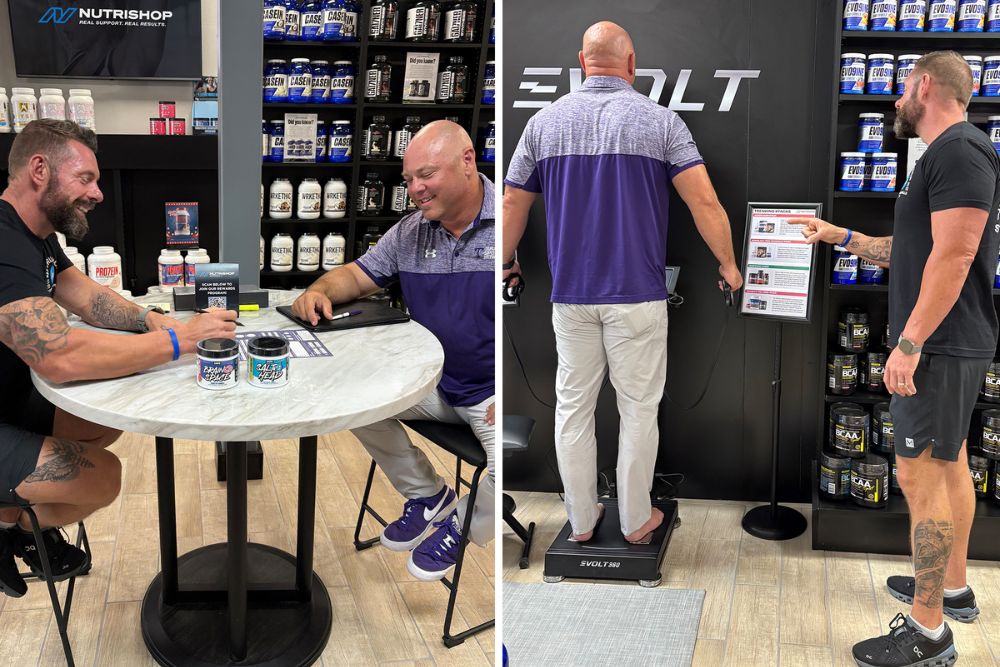
At Nutrishop, the focus has always been on meeting people where they are. Whether you’re fitting in quick workouts between meetings or building a full routine, small, consistent efforts can lead to meaningful progress over time.
And sometimes, it’s those small “snacks” of movement that make the biggest difference.